How to Keep Up the Habit - Piano Practice
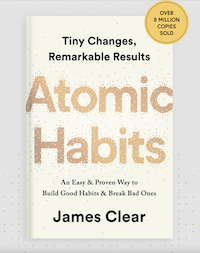
A little while ago I was reading a great book called Atomic Habits by James Clear. It’s such a valuable resource for me as a teacher in helping build up good practice habits in my students, and my self.
I just wanted to apply some of the important ideas from the book to piano practice and the challenges that parents face in keeping up good practice habits over time.
These ideas don’t just work in theory, I’ve used them in helping my kids with their music lessons and can testify they really do work.
Most students start lessons with enthusiasm. That enthusiasm, coupled with a sharper learning curve we experience when we first start something, leads to fast progress at the beginning.
Then comes the slow down.
The fast progress we experience at the beginning of a new learning venture will slow down, and we will experience a plateau.
It’s at this point where are motivation can dip like a mid day slump.
The only way to level up our skills and become a true expert at the piano is to push past this (and many more) plateaus.
So here are some ways to structure our habit to get us through the inevitable slow down.
Place Practice After Something
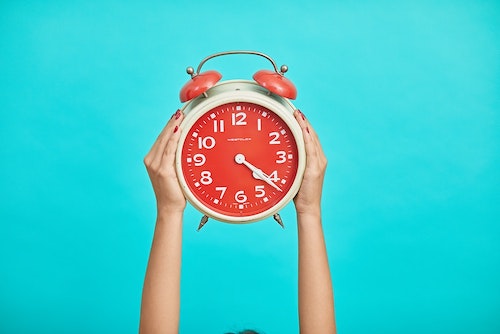
Place the habit after something that is going to happen automatically every day.
Example: you are going to wake up everyday.
What do you do when you wake up? Probably something you don’t need to remind yourself to do. It’s probably so automatic that you don’t think about it at all. And likely, it snowballs into an entire morning routine, that you conduct without any conscious effort.
Leverage that same power at any point in the day by placing your practice routine after a daily event.
Examples of daily events may be:
- You wake up
- You eat breakfast
- You eat dinner
- You get home from work/school
- You shower
You get the idea.
When you put the habit after one of these events, it can create a domino effect that prompts the practice automatically, thus using less of our precious will power.
Place Practice Before a Non-Essential Habit
Do you need a reminder to drink wine? Watch Gray’s Anatomy? Eat Popcorn?
Those sound like fun habits. And you probably don’t need any help in keeping them up. They aren’t bad habits per se, so you don’t mind keeping them.
Place those habits after your piano practice.
After a short while you’ll notice how much you look forward to practice because it signals a cue in our minds that good things are coming our way.
So for our kids, it may be that we sandwich piano practice in between after school snack and Minecraft, or between dinner and Soccer. So long as the last habit is one they enjoy doing and don’t need any reminder to participate.
Put the Piano in an Obvious Place
As a husband, I’ve tried to make a few suggestions to my wife on how we could place the furniture in the home. And over 20 years of marriage I’ve realized this isn’t really something I’m qualified to weigh in on.
But I’m trying to be optimistic.
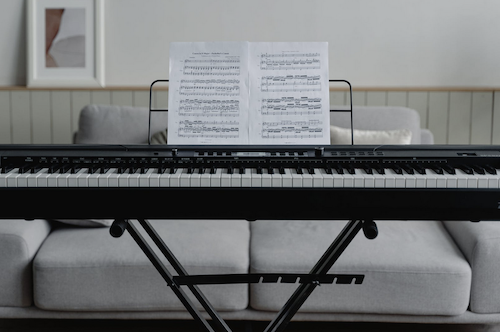
Pianos often get placed in the basement. This is a great way to free up more living space. Especially if you have a grand.
But… out of sight is usually out of mind. And it can become easy to skip practice sessions, not because we don’t want to practice, but because it simply didn’t occur to us.
Is it possible to place the piano in the field of vision? Especially if it is in the field of vision when we are in the “After Something” part of our routine?
Be Able to Play
If you have it as part of your identity that you play piano, then you’ll find it easier to entrench the habits that go along with that identity.
If you identify as a gym rat, you’ll find yourself at the gym a lot. If you identify as a cyclist, you’ll find yourself biking to work more. Many times the behaviour follows the identity and as much as the identity follows the behaviour.
I’ve had some parents ask me how long it will be before their child will be able to play.
I wish I could tell them something definite, but I don’t have a good answer to this question.
The reality is, they can play right now. After one or two lessons, they can play a simple song.
But we’re talking play play. Like the way a person can sit down at the piano and improvise, or play moonlight sonata or Claire de Lune confidently with grace.
The reality is it’s one big sliding scale between an awkward twinkle twinkle and a sonata from a classical composer. It’s not binary, it’s a becoming.
Even professional musicians are seeking to improve their performance in many ways.
Which is funny, like, why are you practicing? You’re done!
But that helps us to understand the mindset of a person who is already a proficient pianist. They don’t feel done, they don’t concern themselves with whether they can play or not, they just play.
Although this is challenging to get to, we need to view ourselves as this person. We don’t concern ourselves with our current or past abilities. Nor do we worry about when we will “be able to play”.
We simply do. We play every day because that is what capable pianists do. They play every day. And they work on the next thing.
Every day, remind yourself that you can play. And the only thing you are doing with your practice sessions is trying to play better.
So when speaking to or about our kids, simply use phrases that indicate they already can play. Like: “she can play piano” instead of “she’s learning the play piano”
Conclusion
I hope some of that is helpful and that you are able to cultivate a strong practice habit.
Has your child's progress at the piano stalled? A practice coach makes practice time productive. Which makes confident kids and proud parents.
If you would like to have a trained professional guide your practice sessions, please send a message with the form below!
And, if you'd like to try out a practice session, book a time here.
Happy Practicing!