Never Apologize for Your Mistakes
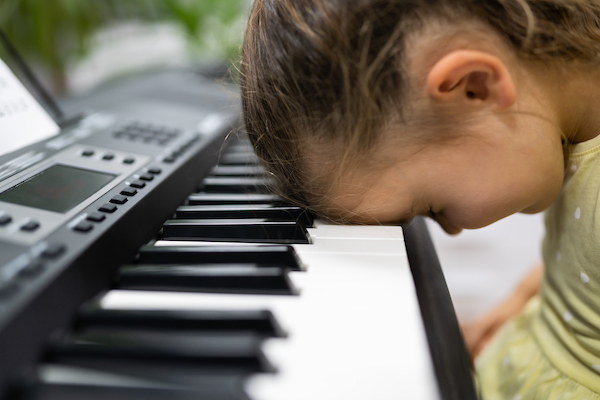
“Anyone who has never made a mistake has never tried anything new.” ― Albert Einstein
Often after a student has made a mistake they say: "sorry". Why should we avoid apologizing for our mistakes?
We have to want success for ourselves.
All the progress a student makes is made from the their own hard work.
So, a student must realize they owe themselves progress and improvement.
Implicit in the apology is that someone else was wronged. So when we make a mistake at the piano, who did we wrong? It’s only you at the piano. Everybody else just sits back and enjoys the music you’re making.
If you are hard on yourself for your mistakes then you should also give yourself a pat on the back for all you’ve learned.
We should have mistakes in our practice.
If we are able to play a piece with next to no mistakes, that means we aren’t learning at an optimal rate. So if a piece is too easy, move on to more challenging material.
We have to aknowledge what a mistake means about us as a musician. It means we are not immediately talented, not naturally gifted and not in a competition. The only person we are competing with is the person we were yesterday.
Mistakes help us to know what to work on next.

An overall pattern of mistakes create a composite description of our progress to date. An insightful teacher can use that information to help you on your next step.
Don't get frustrated, get curious. Next time you make a mistake in practice or at a lesson, take note of it and find out what it’s teaching you.
Mistakes are like a flashlight on your path to improved performance.

The Optimal Number of Mistakes
So, if mistakes are so important, we should make a lot of them on purpose right?
Haha... Obviously, if we make too many mistakes it will be impossible to keep track of them all in order to learn the lessons they teach.
Not only that, but if we make too many mistakes it will make it difficult to bring any piece to the point of completion. Then we will miss out on the satisfaction that comes with performing meaningful music.
Usually I prefer that my students make about one mistake per musical phrase. That makes it easier to identify areas to work on, but still allows the student to get a good grasp on what the music is supposed to sound like as a fiinished product.
Take the Positive Approach
"Music is powerful. As people listen to it, they can be affected. They respond." - Ray Charles

The point is that real music doesn't come from the elimination of mistakes. It comes from accomplishing a goal. Effecting a response in the listener.
It can make people feel happy, feel sad, feel energized. It can especially make parents proud as they listen to their children do their best.
But... if the music is without flaws yet doesn't accomplish it's objective, then it's a failure. No matter how "perfect".
Conclusion
Our mistakes are critical in our progress. So we do not apologize for them. We love mistakes for all that they do in helping us achieve success.- Beau Niebergall